What You Need to Know About PTSD
The psychiatrist and therapist will work together during your treatment. Someone with grief PTSD will require different counseling solutions than someone with combat PTSD. Your counselor will work with you to find solutions for your situation and lifestyle. By Matthew Tull, PhDMatthew Tull, PhD is a professor of psychology at the University of Toledo, specializing in post-traumatic stress disorder. PPS is a disorder with a serious impact on the patient’s qualityof-life and a delay in diagnosis may adversely affect the outcome. Importantly, PPS is not a factitious disorder, a malingering where the patient is faking it.
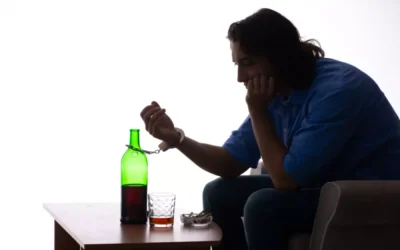
We have new and better treatment options today because of what clinical trials uncovered years ago. Talk to your health care provider about clinical trials, their benefits and risks, and whether one is right for you. If you know someone who may be experiencing PTSD, the most important thing you can do is to help that person get the right diagnosis and treatment.
Clinical Features and Diagnostic Tests
The skills learned during therapy sessions are practiced repeatedly and help support symptom improvement. In the end, the best way to prevent flashbacks and dissociation is to seek out treatment for your PTSD. Experiencing flashbacks and dissociation may be a sign that you are struggling to confront or cope with the traumatic event you experienced. Flashbacks and dissociation are often triggered or cued by some kind of reminder of a traumatic event.
Effective psychotherapies often emphasize a few key components, including learning skills to help identify triggers and manage symptoms. Older children and teens usually show symptoms more like those seen in adults. They also may develop disruptive, disrespectful, or destructive behaviors. Older children and teens may feel guilty for not preventing injury or deaths. They https://ecosoberhouse.com/ can lead to feelings of stress and anger and may interfere with parts of daily life, such as sleeping, eating, or concentrating. The addition of a dissociative subtype to the PTSD diagnosis is expected to further advance research examining the etiology, epidemiology, neurobiology, and treatment response of this subtype and facilitate the search for biomarkers of PTSD.
How to Handle and Prevent PTSD Blackouts
Of note, most of these patients had remained undiagnosed after the first-line investigation. The diagnostic yield of a combined TTT/video EEG approach could be considered high in patients previously undiagnosed in accordance with data reported by Laroche et al 19 in a similar population. The French psychologist Pierre Janet, Freud’s contemporary, theorized an important role for dissociation, framed as a “retraction of the field of personal consciousness”, in the psychological underpinnings of conversion disorder 5.
Details about upcoming events—including meetings, conferences, workshops, lectures, webinars, and chats—sponsored by NIMH. The Division of Intramural Research Programs (IRP) is the internal research division of the NIMH. Over 40 research groups conduct basic neuroscience research and clinical investigations of mental illnesses, brain function, and behavior at the NIH campus in Bethesda, Maryland.
PTSD Consultation Program
For example, they may learn to say to themselves, “Even if I don’t have control here, I won’t be threatened in this situation.” Everyone has thoughts or beliefs that help them understand and make sense of their surroundings. After trauma, https://ecosoberhouse.com/article/dealing-with-ptsd-alcohol-blackouts-and-memory-loss/ a person with PTSD may think or believe that threat is all around, even when this is not true. This course describes a defense cascade model of dissociation to illustrate the etiology and mechanisms underlying symptomatology.
- They can lead a person to feel detached from friends or family members.
- Once you pass the legal blood alcohol concentration — which usually happens through binge drinking, typically four drinks for women and five for men in the span of two hours — the efficiency of your memory decreases until you black out.
- Spence and colleagues 24 used positron emission tomography to test the central question whether patients with CD/FND are feigning their symptoms.
- For example, Neylan et al20 failed to find PTSD-related memory deficits when veterans with psychiatric comorbidities were excluded.
- It is important for anyone with PTSD symptoms to work with a mental health professional who has experience treating PTSD.
- For instance, stress from your work may have increased the frequency of your PTSD blackouts.